> ## Documentation Index
> Fetch the complete documentation index at: https://docs.go.gbgplc.com/llms.txt
> Use this file to discover all available pages before exploring further.
# Overview
> Review and monitor customer identity verification sessions in the GBG GO Investigation portal to detect fraud and validate identity claims.
Investigation is a feature in GBG GO that allows you to review and monitor customer identity information submitted during [journey execution](/docs/go-v2/developer-integration/execute-customer-journeys/overview).
The Investigation portal can be used to identify potential fraud patterns based on data provided by customers and take appropriate actions on suspicious activities.
For example, a customer has gone through the journey designed in your GBG GO Journey builder, but you need to investigate further into their submitted information to ensure the verification is legitimate before making a final decision.
The Investigation feature allows you to:
* Review all submitted information.
* Examine document images.
* Validate identity claims.
* Check for potential fraud signals that might not have been automatically detected during the initial verification process.
### Switch between environments
GBG GO provides two separate environments for Investigation:
* **Production environment** Contains live customer verification sessions.
* **Preview environment**: Contains test verification sessions.
To switch between environments, click either the **Production Environment** or **Preview Environment** tab at the top-left side of the page. For more information about environments, refer to [Publish journey](/docs/go-v2/platform/journey-builder/publish-journey).
### Switch between regions
The GBG GO platform allows you to switch between different geographical regions when investigating customer verification sessions. This feature enables you to access region-specific customer data based on where their verification was processed. For more information about regional endpoints, refer to the [API reference overview documentation](/docs/go-v2/api-reference/overview).
#### Available regions
The region selector in the top-right corner of the Investigation dashboard provides access to verification data processed in different geographical locations:
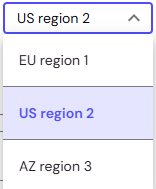 * **EU region 1**: Verification data processed through European Union endpoints.
* **US region 2**: Verification data processed through United States endpoints.
* **AZ region 3**: Verification data processed through Australia/New Zealand endpoints.
The available regions displayed will correspond to the functions assigned to the user's role in PingID.
#### Switch regions
To change the active region:
1. Click the region list in the top-right corner of the Investigation dashboard.
2. Select the desired region. The dashboard then displays sessions from the selected region.
## FAQ
You can access detailed failure reasons in two ways:
* Through the v2 API error response
* Through the **Investigation** portal.
### v2 API error responses
The v2 API returns structured error objects that include a machine-readable error code, a description of the problem, and a recommended action. Each error specifies where the issue originated, making it easier to diagnose failures programmatically.
```json theme={null}
{
"errors": [
{
"code": "4002",
"name": "MISSING_FIELD",
"location": "Body",
"problem": "problem description goes here",
"action": "action to resolve the issue goes here"
}
]
}
```
| Field | Description |
| ---------- | -------------------------------------------------------------------------- |
| `code` | Numeric error code (returned as a string). |
| `name` | Machine-readable error identifier (for example, `MISSING_FIELD`). |
| `location` | Where the error originated: `Body`, `Authorization`, `Path`, or `Service`. |
| `problem` | A description of what went wrong. |
| `action` | What you should do to resolve the error. |
Every API response also includes an `X-Request-ID` header. Include this value when contacting GBG support. It correlates your request with server-side logs for faster troubleshooting.
### Investigation portal
For document-specific verification failures, the **Investigation** portal provides the most detailed view. To access granular failure reasons:
1. Log in to the GBG GO platform and navigate to the **Investigation** section.
2. Click the **Session ID** of the session you want to review. This opens the session detail view, which shows an overview of the session.
3. Navigate to the **Processing** tab to see each module's outcome, for example, Match, No Match, or Error.
4. Expand any module section to see a breakdown of individual data point matches.
5. Click **More details** to open the module detail view. The available tabs vary by module type.
6. Check the **Raw Response** tab for the complete response from the verification provider, which contains the module errors and reasons.
GBG GO provides two separate environments:
* **Preview environment**: A test environment where you can validate journeys before deploying them to production. Use this to test API calls, verify journey behaviour, and confirm that modules are configured correctly.
* **Production environment**: The live environment where published journeys are used by real customers.
**To publish a journey to the preview environment:**
1. Open your journey in the Journey builder.
2. Click **Publish to Preview**.
3. A confirmation message appears: "Delivery deployed successfully".
4. Click **Dashboard**, where you can see the environment label (Preview), version number, resource ID, last published date, and the auto-generated schema.
To access preview data in the Investigation portal:
1. Navigate to **Investigation**.
2. Click the **Preview Environment** tab.
The preview environment uses a separate resource ID from production. When testing your API integration, use the preview resource ID from the Dashboard. Once testing is complete, publish the journey to production to generate a production resource ID.
* **EU region 1**: Verification data processed through European Union endpoints.
* **US region 2**: Verification data processed through United States endpoints.
* **AZ region 3**: Verification data processed through Australia/New Zealand endpoints.
The available regions displayed will correspond to the functions assigned to the user's role in PingID.
#### Switch regions
To change the active region:
1. Click the region list in the top-right corner of the Investigation dashboard.
2. Select the desired region. The dashboard then displays sessions from the selected region.
## FAQ
You can access detailed failure reasons in two ways:
* Through the v2 API error response
* Through the **Investigation** portal.
### v2 API error responses
The v2 API returns structured error objects that include a machine-readable error code, a description of the problem, and a recommended action. Each error specifies where the issue originated, making it easier to diagnose failures programmatically.
```json theme={null}
{
"errors": [
{
"code": "4002",
"name": "MISSING_FIELD",
"location": "Body",
"problem": "problem description goes here",
"action": "action to resolve the issue goes here"
}
]
}
```
| Field | Description |
| ---------- | -------------------------------------------------------------------------- |
| `code` | Numeric error code (returned as a string). |
| `name` | Machine-readable error identifier (for example, `MISSING_FIELD`). |
| `location` | Where the error originated: `Body`, `Authorization`, `Path`, or `Service`. |
| `problem` | A description of what went wrong. |
| `action` | What you should do to resolve the error. |
Every API response also includes an `X-Request-ID` header. Include this value when contacting GBG support. It correlates your request with server-side logs for faster troubleshooting.
### Investigation portal
For document-specific verification failures, the **Investigation** portal provides the most detailed view. To access granular failure reasons:
1. Log in to the GBG GO platform and navigate to the **Investigation** section.
2. Click the **Session ID** of the session you want to review. This opens the session detail view, which shows an overview of the session.
3. Navigate to the **Processing** tab to see each module's outcome, for example, Match, No Match, or Error.
4. Expand any module section to see a breakdown of individual data point matches.
5. Click **More details** to open the module detail view. The available tabs vary by module type.
6. Check the **Raw Response** tab for the complete response from the verification provider, which contains the module errors and reasons.
GBG GO provides two separate environments:
* **Preview environment**: A test environment where you can validate journeys before deploying them to production. Use this to test API calls, verify journey behaviour, and confirm that modules are configured correctly.
* **Production environment**: The live environment where published journeys are used by real customers.
**To publish a journey to the preview environment:**
1. Open your journey in the Journey builder.
2. Click **Publish to Preview**.
3. A confirmation message appears: "Delivery deployed successfully".
4. Click **Dashboard**, where you can see the environment label (Preview), version number, resource ID, last published date, and the auto-generated schema.
To access preview data in the Investigation portal:
1. Navigate to **Investigation**.
2. Click the **Preview Environment** tab.
The preview environment uses a separate resource ID from production. When testing your API integration, use the preview resource ID from the Dashboard. Once testing is complete, publish the journey to production to generate a production resource ID.